
Inforlandia Develops New High-Performance AI Platform with 4× NVIDIA H200 NVL
Inforlandia continues to strengthen its capacity to develop custom AI infrastructure with the launch of a new high-performance platform, specifically designed for environments involving the research, development, and deployment of AI models in production.
Based on 4× NVIDIA H200 NVL, this solution provides 564 GB of HBM3e VRAM, 503 GiB of DDR5 memory, and the capacity to run large language models with contexts of up to 128 K tokens.
The platform has been fully validated by Inforlandia—from the hardware to the software stack—ensuring the expected performance in scenarios involving multiple users and demanding AI workloads.
A platform designed for high-performance AI
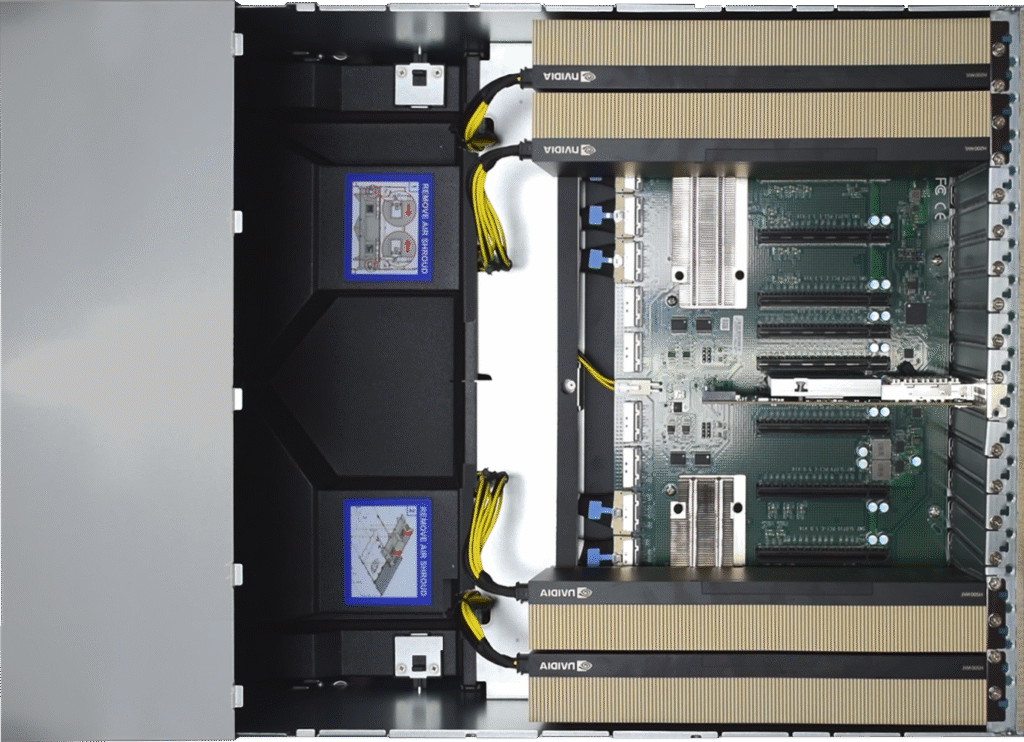
The new solution is based on an INSYS SM6-322GA (powered by Supermicro), specifically configured to maximize the processing power and memory available for artificial intelligence workloads.
The configuration includes:
4× NVIDIA H200 NVL, with 141 GB of HBM3e per GPU;
564 GB of total VRAM;
2× Intel Xeon Gold 6530, with 64 cores / 128 threads;
503 GiB of DDR5 memory;
3.5 TiB of NVMe storage;
2× 10 GbE + 2× NDR400 InfiniBand / 400 GbE;
3× redundant 3200 W power supplies with Titanium efficiency;
Dedicated management via BMC/IPMI;
Ubuntu 22.04 LTS.
This combination allows for high GPU computing power and memory capacity to be concentrated in a single system, providing a platform ready for large-scale AI models and applications that require long context.
LLM, imagem e vídeo numa única infraestrutura
More than just providing high-performance hardware, Inforlandia has validated a complete AI stack based on Docker Compose running on Ubuntu 22.04 LTS.
The platform integrates:
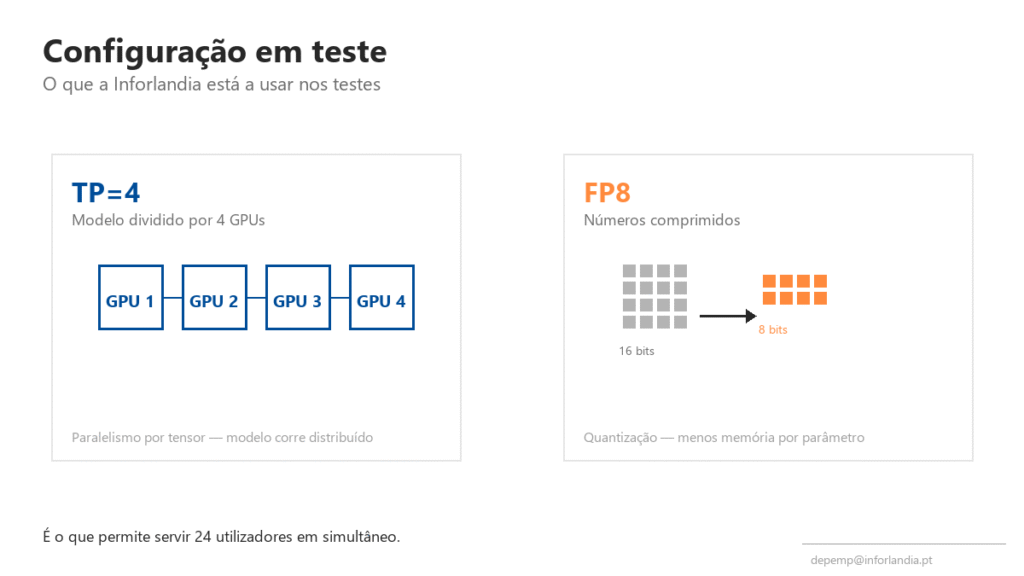
vLLM, with the OpenAI API for the Qwen3.8-27B-FP8 model, utilizing the four GPUs in tensor parallel mode;
Open WebUI, for interacting with the models via a web interface;
ComfyUI + FLUX, for image generation and editing;
Cosmos3, for video generation.
The result is an infrastructure capable of supporting LLM, image generation, and video generation on the same node, without the need to rely on separate systems for each workload.
This approach allows Inforlandia to develop solutions tailored to the specific needs of each organization, combining hardware, software, and configuration into an integrated platform.
Performance validated in real-world scenarios
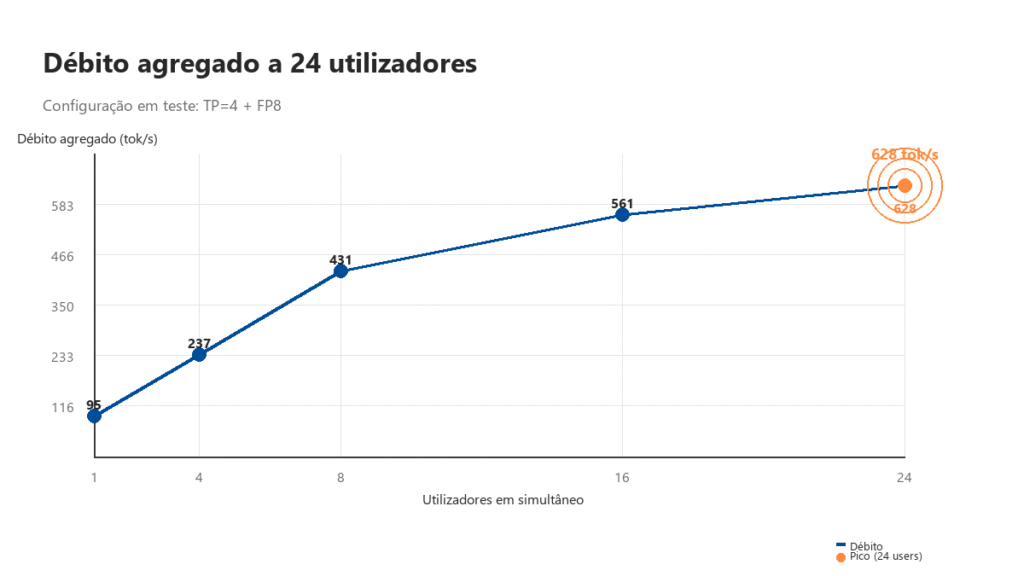
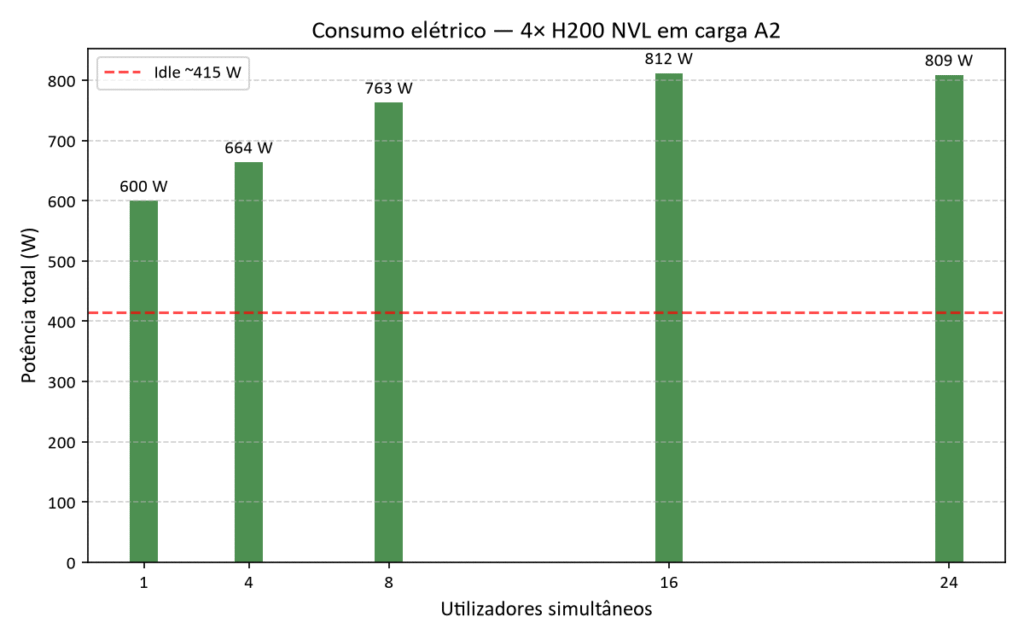
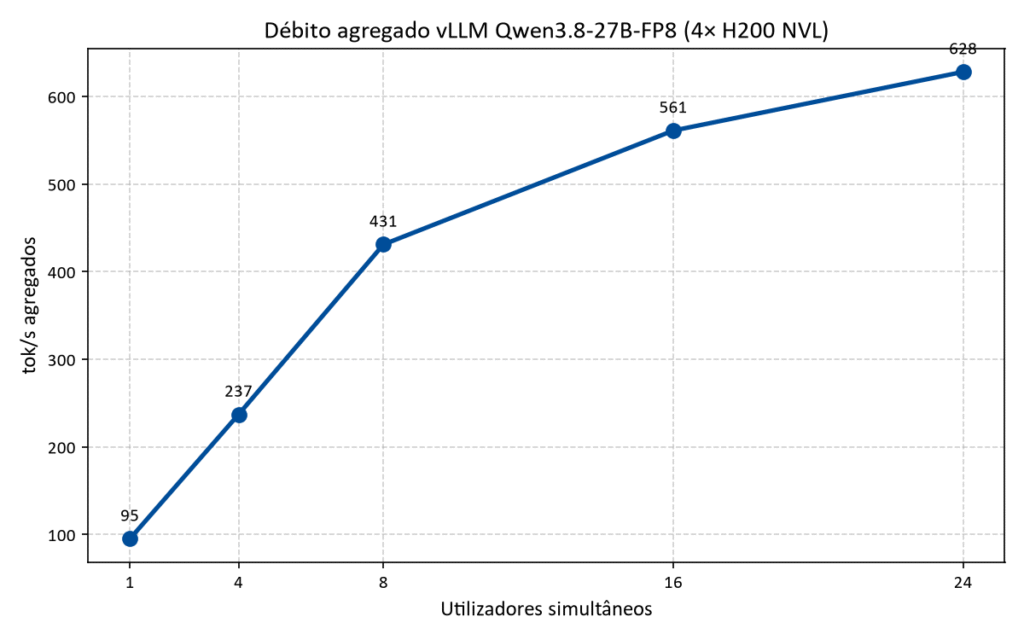
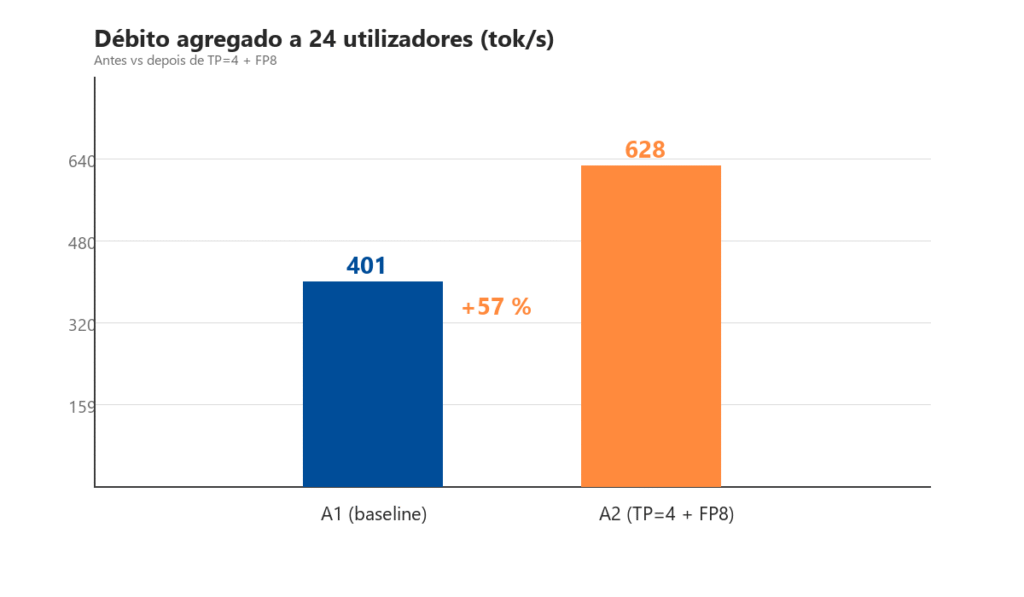
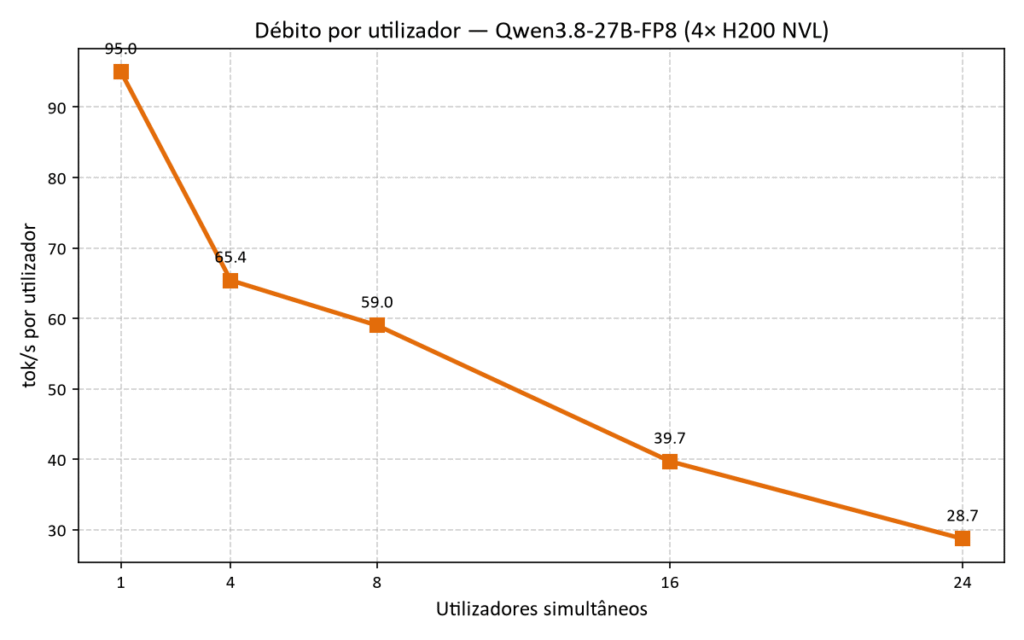
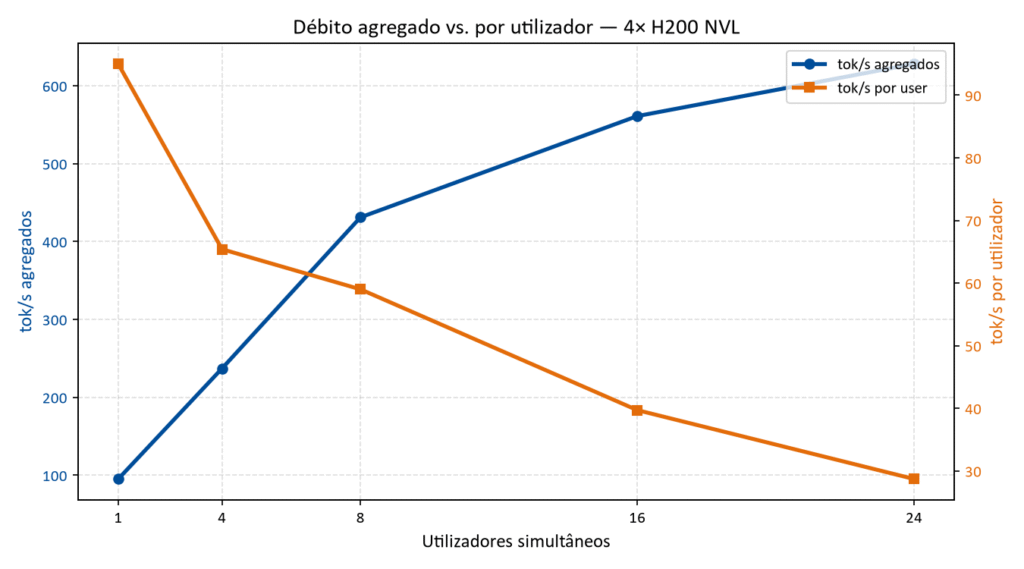
Tests conducted with the model loaded into memory demonstrated the platform’s ability to maintain a high throughput even with multiple concurrent users.
In a scenario with larger prompts, the following results were achieved:
95 tokens/second with 1 user;
237 tokens/second with 4 users;
431 tokens/second with 8 users;
561 tokens/second with 16 users;
628 tokens/second aggregate with 24 concurrent users.
With 24 users, the time to first token (TTFT) was 363 ms.
These results demonstrate the platform’s ability to handle environments where the AI infrastructure is shared by multiple users and applications while maintaining a high level of performance.
The available memory capacity also allows for working with 128 K context tokens, making it possible to support approximately 98 simultaneous requests at 128 K tokens with the available KV cache capacity.
On-Premises AI for Research and Production
The development of this platform addresses a growing need among organizations that wish to run AI models on their own infrastructure, while maintaining greater control over their data, the runtime environment, and platform operations.
Universities, laboratories, research centers, and other organizations with advanced AI needs can benefit from infrastructure specifically scaled to their models, applications, and usage levels.
With this new platform, Inforlandia once again demonstrates its ability to design, configure, and validate high-performance computing systems tailored to specific artificial intelligence applications.
An Infrastructure Tailored to the Application
There is no one-size-fits-all configuration that addresses all AI challenges. The number and type of GPUs, memory capacity, networking, storage, and software stack must be defined based on the models and workloads the organization intends to run.
It is precisely in this process of sizing and developing customized solutions that Inforlandia’s expertise enables us to transform specific requirements into a ready-to-use AI infrastructure.
Do you need an AI infrastructure scaled for research or production?
Contact Inforlandia at depemp@inforlandia.pt or via the contact form available on our website.
An AI server is a computing infrastructure designed to run artificial intelligence applications and models, typically using high-performance GPUs with large amounts of memory.
An on-premises AI infrastructure allows organizations to run artificial intelligence models and applications on their own infrastructure, providing greater control over the runtime environment, data, and operations.
The platform was validated using a stack that includes vLLM, Open WebUI, ComfyUI + FLUX, and Cosmos3, enabling the consolidation of LLM, image generation, and video generation workloads into a single infrastructure.
In the tests conducted, the platform achieved an aggregate rate of 628 tokens per second with 24 concurrent users, using the test scenario with medium-length prompts.
Yes. The message this page should convey is precisely the ability to scale and configure AI infrastructures according to each organization’s models, applications, and needs.